
What is central heating leak detection?
Central heating leak detection investigates water escaping from the radiator or underfloor heating circuit, often when boiler pressure falls without an obvious drip. A specialist can use pressure tests, thermal imaging, acoustic listening or tracer gas to narrow down the location. Finding the leak, opening the floor and repairing the pipe are separate parts of the job and should be described in the quote.
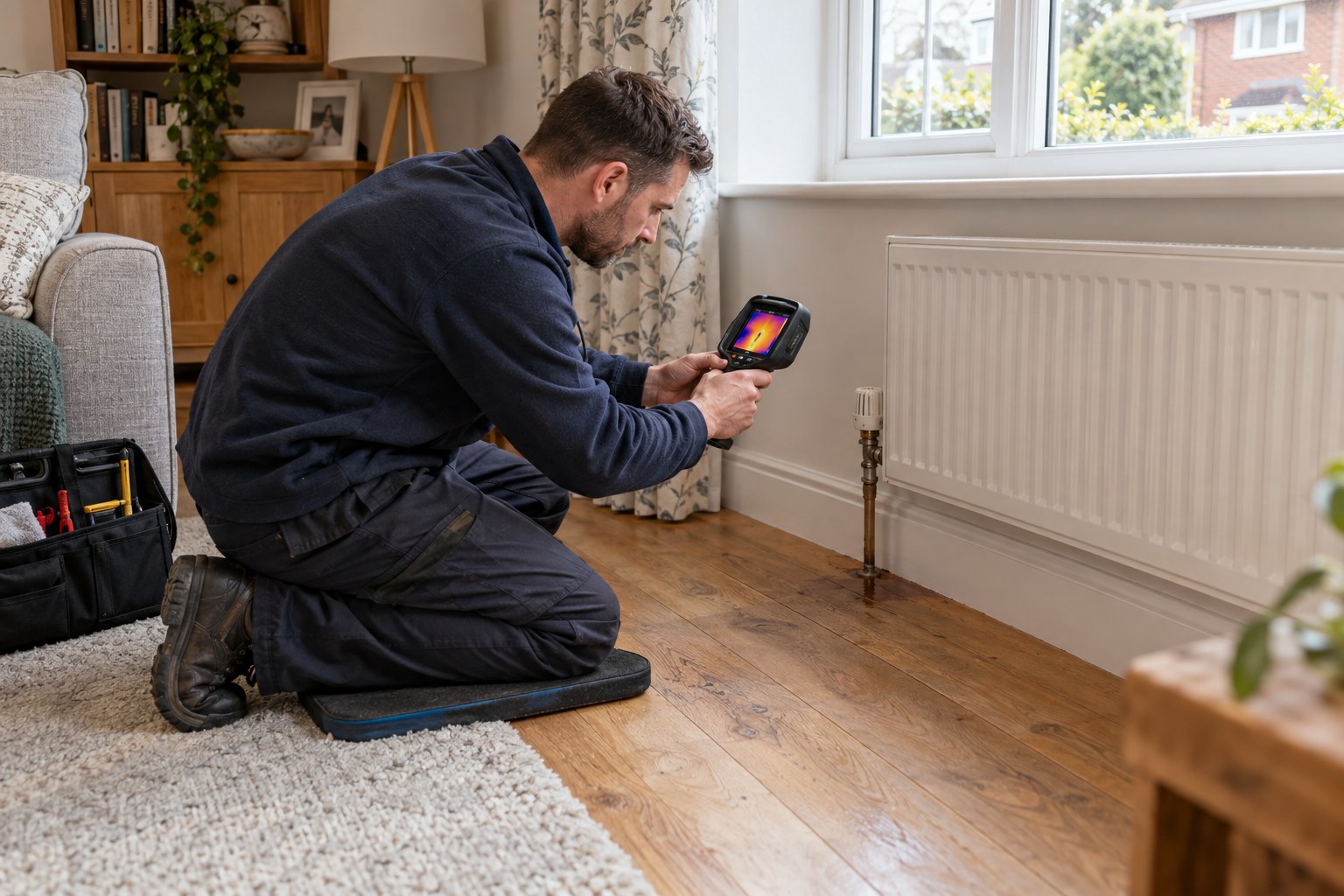
Signs you may need central heating leak detection
- The sealed system needs repeated topping up and the cause has not been identified.
- Ceiling stains or damp skirting coincide with heating pipe routes.
- Floor finishes have lifted or a local warm patch needs investigation.
- An underfloor heating circuit loses pressure during testing.
- You need a written investigation report before discussing trace-and-access costs with an insurer.
What the engineer may do
- Record the pressure-loss pattern, previous checks and the layout of radiators, manifolds and concealed pipework.
- Arrange suitable boiler checks to rule out appliance faults, expansion problems or discharge losses before tracing hidden pipes.
- Isolate and pressure-test sections where possible to narrow the suspect circuit.
- Choose appropriate methods: thermal imaging for useful temperature patterns, acoustic listening for escaping water, or tracer gas where suitable.
- Confirm the likely location using the available evidence and agree targeted access before lifting boards or cutting finishes.
- Price and carry out the agreed pipe repair, then refill, vent and retest the circuit; include inhibitor where appropriate.
- Document the findings and any repair, clear away debris and state what floor, tile or decoration reinstatement remains.
Decisions that change the job
A thermal camera does not see through a floor or wall. It measures surface temperatures, which can help reveal a pipe route or unusual heat pattern under suitable conditions. Acoustic equipment and tracer gas also depend on access, floor construction and the leak. No method guarantees an immediate result. Boiler checks may need a Gas Safe engineer even when the tracing specialist works only on the water circuit.
What to include in your enquiry
Note the cold pressure reading and how long it takes to fall. Mention earlier expansion vessel or relief valve checks, visible stains, radiator valves and whether floors are timber, concrete, tiles or laminate. In a flat, explain which rooms are above affected neighbours and who can authorise access.
Costs and timing
The site's indicative UK guide for central heating leak detection is £150–£750, with a typical timescale of 2–6 hours. These figures are a starting point, not a fixed offer or a promise of completion within that time.
The number of circuits, time on site, detection equipment, floor construction and need for targeted access affect the total. Detection-only work differs from trace-and-repair work. Difficult leaks, multiple visits and reinstating tiles, screed or decoration can push the final bill beyond the guide.
Competence, safety and paperwork
Water-side leak tracing does not automatically require Gas Safe registration; associated work on the gas boiler must use the appropriate competence. Obtain any landlord or freeholder permission needed for access. Structural floors, fire protection and acoustic layers must be considered when opening and reinstating a floor, rather than treated as ordinary decoration.
Check the terms of any home insurance trace-and-access cover before authorising work. Policies differ, and cover for locating a leak does not necessarily pay for the damaged pipe or every floor finish. Ask what report the insurer needs and who will approve the repair.
Request and compare written quotes
Use the free enquiry form to describe the central heating leak detection work. Boiler Quotes can introduce you to up to four independent heating businesses that cover your postcode. Availability and suitability determine how many respond; there may be fewer or none. The engineers assess and price the work themselves.
Businesses joining the network are asked for relevant insurance details and references. Check the attending engineer's credentials, the written scope, exclusions, VAT position and payment terms before choosing. Sending the enquiry is free and you do not have to accept a quote. Paid diagnosis or survey work must be agreed with the business in advance.
Frequently asked questions
Does falling pressure prove there is a hidden pipe leak?
No. Boiler leaks, pressure relief discharge and expansion vessel faults can also cause pressure loss. Suitable appliance checks should come before assuming the leak is under a floor.
Will detection involve lifting every floorboard?
Usually the aim is to narrow the search before opening a targeted area. Access can still be necessary, and the specialist should explain the limits of the chosen methods and obtain agreement before opening finishes.
How long does leak detection take?
The site guide is 2–6 hours for many investigations. Difficult floor construction, several circuits or an intermittent leak can require longer or another visit.