
What is hot water cylinder replacement?
Hot water cylinder replacement means changing the vessel that stores heated water for taps and showers. A vented cylinder is supplied from a cold water storage tank, while an unvented cylinder uses the mains supply. Direct cylinders use immersion heaters; indirect cylinders normally receive heat through a coil from the boiler. The replacement must suit both the heat source and the household's demand.
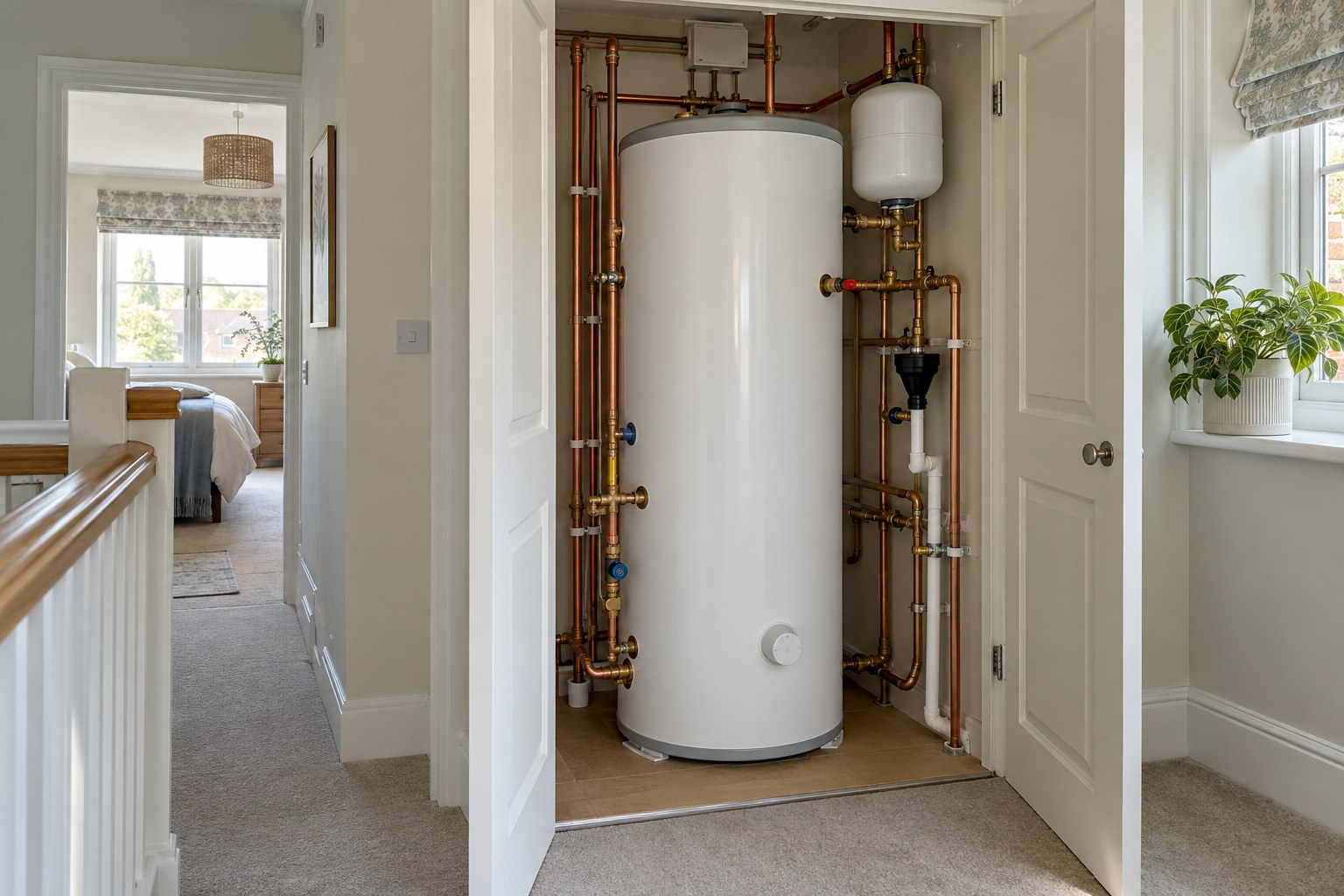
Signs you may need hot water cylinder replacement
- Water appears around the cylinder body or its connections, and a repair assessment points to replacement.
- The hot water supply is too small for the household or takes too long to recover after use.
- Scale, corrosion or age has affected the cylinder and its fittings.
- A heating alteration calls for a cylinder with a suitable coil, capacity or heat source connection.
- You want to explore mains-pressure hot water, subject to supply and discharge-route checks.
What the engineer may do
- Identify whether the existing store is vented or unvented and direct or indirect; inspect connections and cupboard access.
- Check capacity, recovery needs and heat source compatibility; test mains pressure and flow before proposing unvented hot water.
- Agree a safe discharge route, required valves and expansion provision for an unvented installation.
- Protect floors, isolate water and electrical supplies safely, drain the old cylinder and plan how it will be removed.
- Fit the replacement, connect pipework, thermostats and immersion heaters, with appropriate electrical competence for wiring.
- Test temperature controls, safety devices and joints; refill and commission the system before handover.
- Explain operation and servicing, provide relevant records and compliance paperwork, remove the old cylinder and agree making good.
Decisions that change the job
A cylinder leak does not always mean the vessel has failed. Water can come from a connection, immersion seal or valve, so ask the installer to confirm the source first. A mains-pressure cylinder will not overcome a poor incoming supply by itself. Cupboard dimensions also matter: the new cylinder, valves and expansion arrangement all need accessible space, not just room to squeeze the vessel through the door.
What to include in your enquiry
Describe the cylinder type if you know it, its approximate size and whether hot water comes from the boiler, an immersion heater or another source. Mention loft tanks, weak shower flow, simultaneous bathroom use and where the water is appearing. Leave safety valves and electrical covers alone.
Costs and timing
The site's indicative UK guide for hot water cylinder replacement is £800–£3,000, with a typical timescale of 1–2 days. These figures are a starting point, not a fixed offer or a promise of completion within that time.
Cylinder capacity, vented or unvented design, coil specification, cupboard access, immersion wiring, valve replacement and discharge pipework affect the price. A conversion with mains supply changes can exceed a simple like-for-like replacement.
Competence, safety and paperwork
Unvented hot water storage needs a competent installer with appropriate unvented hot water training, often described as G3 competence. Approved Document G for England covers England; other UK nations have their own requirements. Confirm the local notification route and safety documentation. Gas Safe registration is needed where the job also involves gas work, rather than for water-side cylinder work alone.
Ask how long the hot water will be off and whether removal of a loft tank is included. A tank may still serve another part of the property, so it should not be removed merely because one cylinder is changing.
Request and compare written quotes
Use the free enquiry form to describe the hot water cylinder replacement work. Boiler Quotes can introduce you to up to four independent heating businesses that cover your postcode. Availability and suitability determine how many respond; there may be fewer or none. The engineers assess and price the work themselves.
Businesses joining the network are asked for relevant insurance details and references. Check the attending engineer's credentials, the written scope, exclusions, VAT position and payment terms before choosing. Sending the enquiry is free and you do not have to accept a quote. Paid diagnosis or survey work must be agreed with the business in advance.
Frequently asked questions
Will an unvented cylinder improve my shower pressure?
It may help where the incoming mains supply is suitable, but it does not create water flow that the supply cannot deliver. The installer should test pressure and flow before recommending a conversion.
Does a leak always mean I need a new cylinder?
No. A leaking fitting, valve or immersion seal may be repairable. The installer needs to locate the leak and assess the cylinder body before recommending replacement.
How long will a cylinder change take?
The site guide allows 1–2 days. A straightforward replacement may be quicker than a conversion needing new safety discharge pipework, electrical changes or difficult cupboard access.